Prep is most of the job
Cracked tile, hollow spots and grout that crumbles out are almost never the tile's fault. They come from a floor that flexes, a surface that is not flat, or tile set without full mortar coverage underneath. We spend the time on the base so the finished floor stays solid for decades.
Tile floors
Entryways, mudrooms, kitchens, bathrooms, laundry rooms and basements. A Collingwood front entry deals with snow, road salt, beach sand and ski boots, sometimes all in the same week. Porcelain shrugs all of it off and cleans up with a mop.
Large-format tile
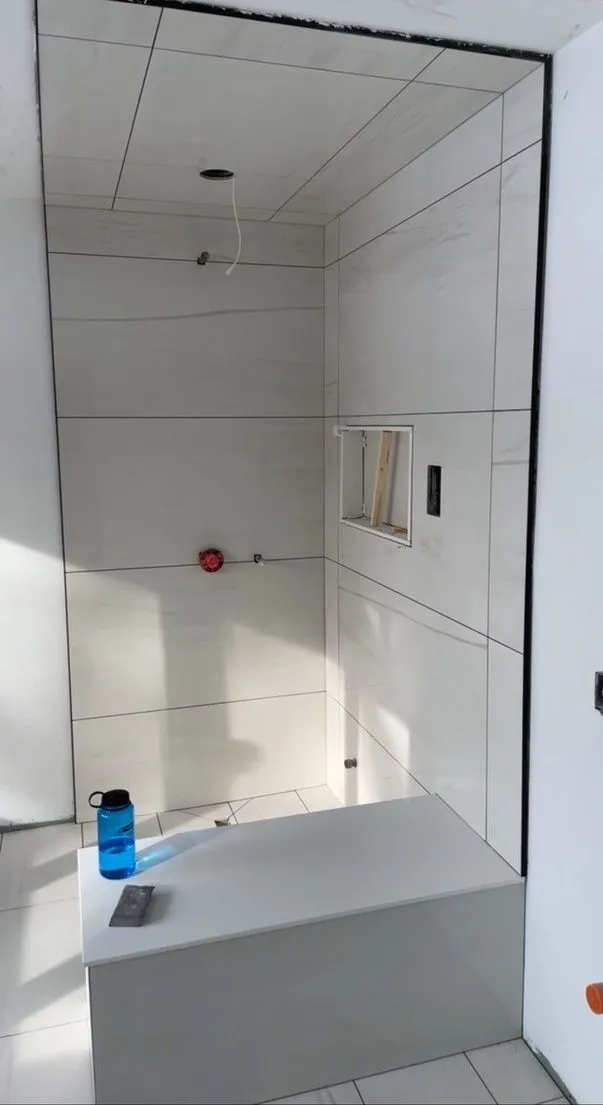
Big porcelain panels, 24 by 48 inches and up, give a floor or shower wall a clean, modern look with very few grout lines. They are also unforgiving. A floor that is slightly out of flat shows up as edges that catch the light and catch your toes.
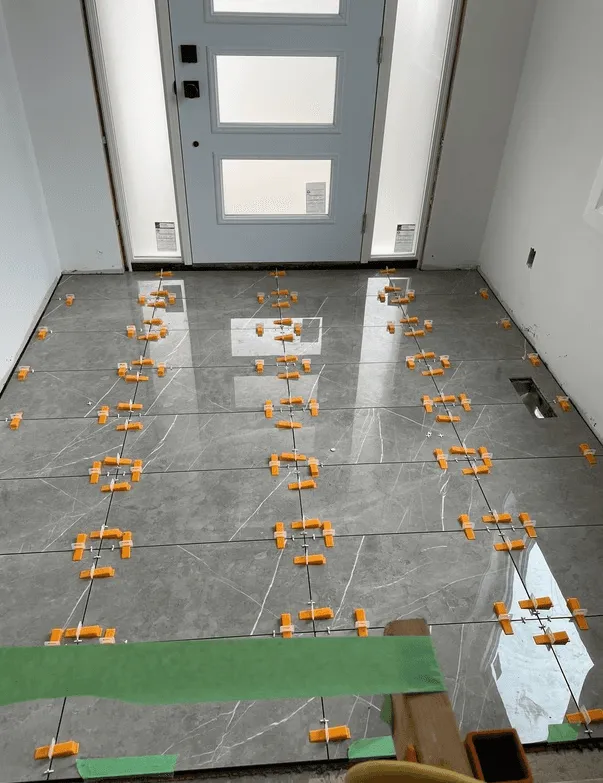
We flatten the floor first, and set large-format tile with a levelling system so neighbouring edges finish flush. You can see the clips in the entryway photo on this page.
Walls, showers and feature walls
Shower walls, tub surrounds, bathroom feature walls and kitchen backsplashes. Wall tile is where layout matters most, because your eye goes straight to the cut pieces. We plan where the cuts land before the first tile goes up, so you do not end up with a sliver at the ceiling or beside the window.
Hex, mosaic and patterns
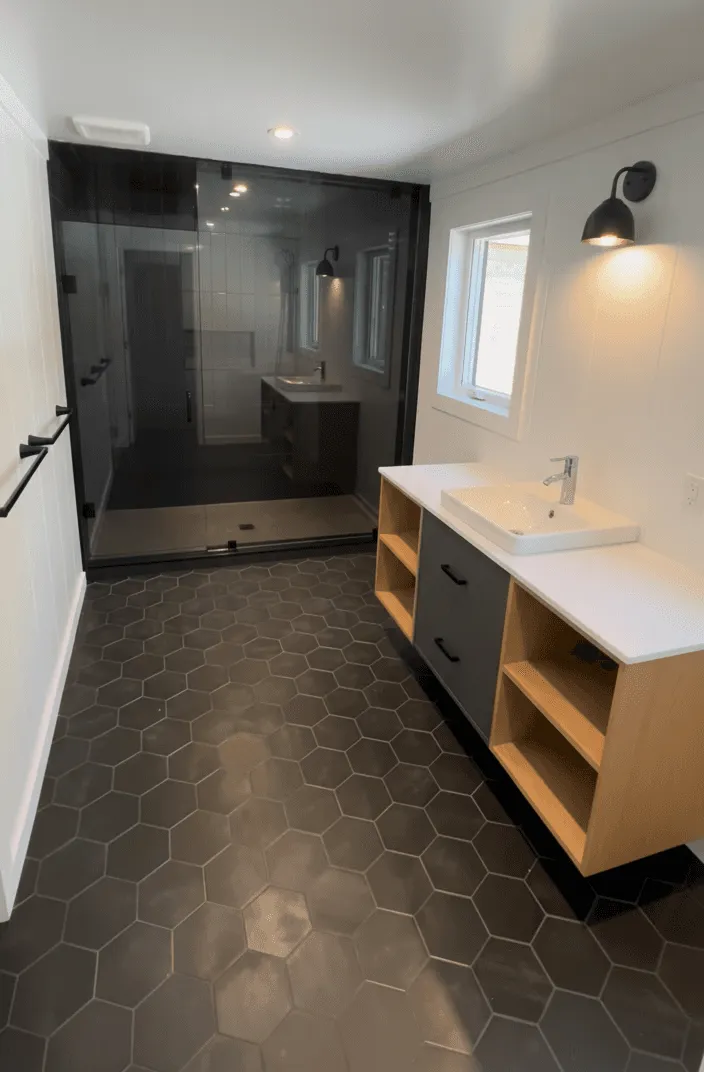
Hexagon floors, penny and mosaic sheets, vertical stack, running bond and offset layouts. Patterned floors take more layout and more cuts, and they are worth it. The black hex bathroom in our work is a good example.
Tile going into a bathroom? See bathroom renovations and walk-in showers. In the kitchen, see backsplashes.